
The Importance of Standing Poses in Yoga
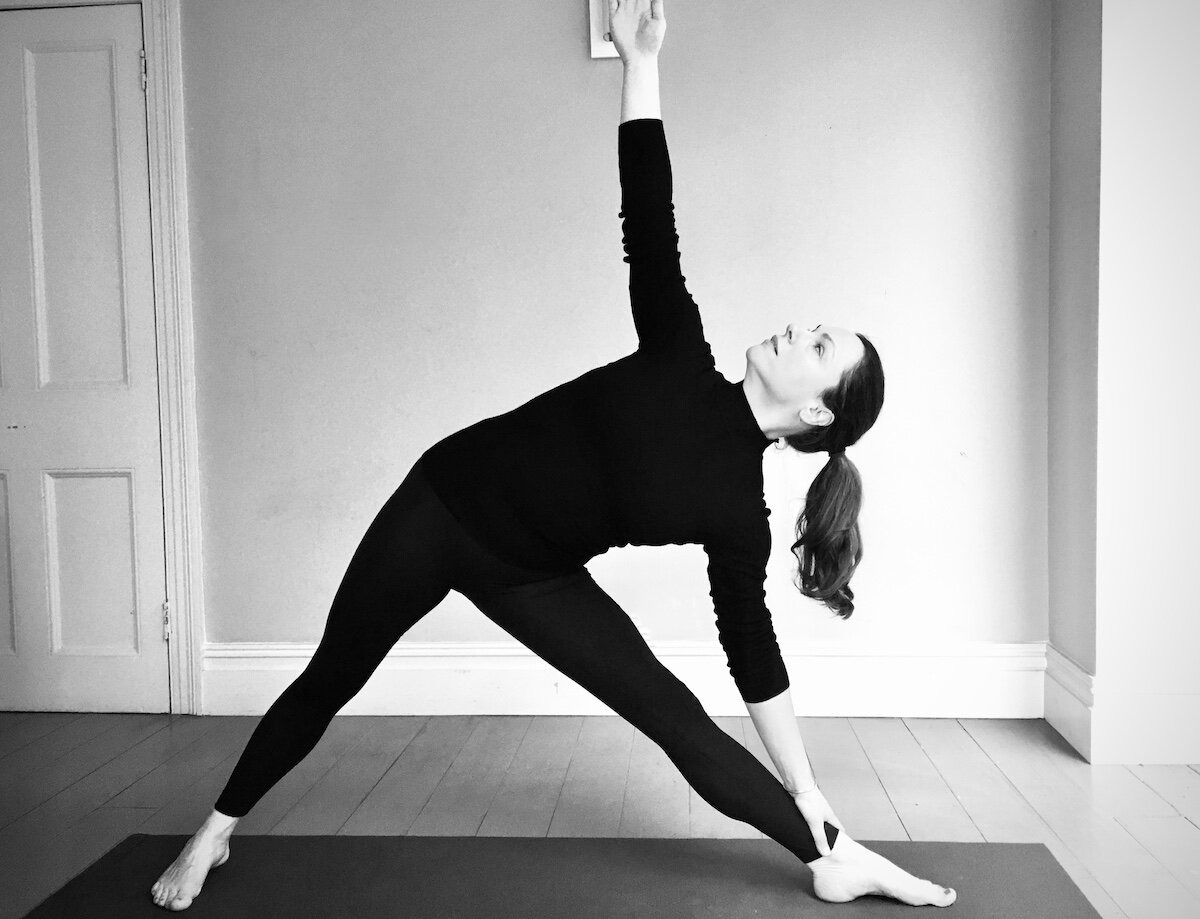
Iyengar yoga places a great deal of emphasis on the standing group of asanas as the foundation of our yoga practice. They are the first poses we learn (and often practice) because they activate and strengthen our bodies in preparation for what is to come. Standing poses inform the rest of our yoga practice, teaching us many important actions which are put to use when we come to approach the different groups of asanas and more advanced poses, including inversions. As well as teaching us important muscular actions, they also teach us the fundamentals of balance and stability, while cultivating stamina and will power.
When practicing the standing poses, the balance of weight between the feet, as well as the distribution of weight throughout each foot, has an effect on the actions of the ankles and the legs, which influence the position of the pelvis and, in turn, the extension of the spine. As Mr. Iyengar puts it in Light on Yoga: “People do not pay attention to the correct method of standing. Some stand with the body weight thrown only on one leg, or with one leg turned completely sideways. Others bear all the weight on the heels, or on the inner or outer edges of the feet… Owing to our faulty method of standing and not distributing the body weight evenly on the feet, we acquire specific deformities which hamper spinal elasticity.”
We learn how to stand correctly in the most basic standing pose, Tadasana (Mountain Pose), also known as Samasthiti, which translates as “Equal Standing”. Although it is a basic pose, essentially just standing upright with the arms by the sides or stretched up over the head, there needs to be an awareness of the muscular actions and positioning throughout the body, from the soles of the feet to the crown of the head. Even the tips of the fingers should be infused with energy. Mr Iyengar says of the effects of standing correctly in Tadasana: “One feels light in body and the mind acquires agility”, and I agree - on many occasions I have started a yoga class, lacking in energy, to be revitalised by simply standing in Tadasana.
Tadasana teaches us to balance our body weight and extend our spine in a simple and symmetrical way, but many of the same actions are translated to the more complex and demanding standing postures, in which the spine may extend in a number of different directions, requiring a greater degree of flexibility, strength and balance. Still, in these more challenging poses, we must attempt to recall the feeling of Tadasana and hope to emulate that same sense of lightness in the body and agility in the mind. It is the hope that a difficult standing twist will one day be performed with similar ease. The same can be said of the inversions. When standing on one’s head in Sirsasana, applying the Tadasana actions of legs and hips brings lightness to the pose.
As well as providing us with the tools with which to advance our yoga practice, the standing asanas offer a host of benefits in and of themselves. Regular practice tones and strengthens the legs, improves flexibility throughout the body, enhances organic and respiratory function, helps to ease the symptoms of depression and anxiety and aids digestion. Body awareness, co-ordination and connectivity are improved as we learn how the whole body must work together as one balanced unit. In learning to stand correctly, our postures improve and minor deformities in the legs and feet are corrected. We are often reminded of how our sedentary lifestyles and prolonged periods of sitting can impact adversely on our health and longevity. The standing asanas are an antidote to this lifestyle, bringing vitality and energy to our bodies and enlivening our minds.
The Benefits of Restorative Yoga
What is Restorative Yoga?
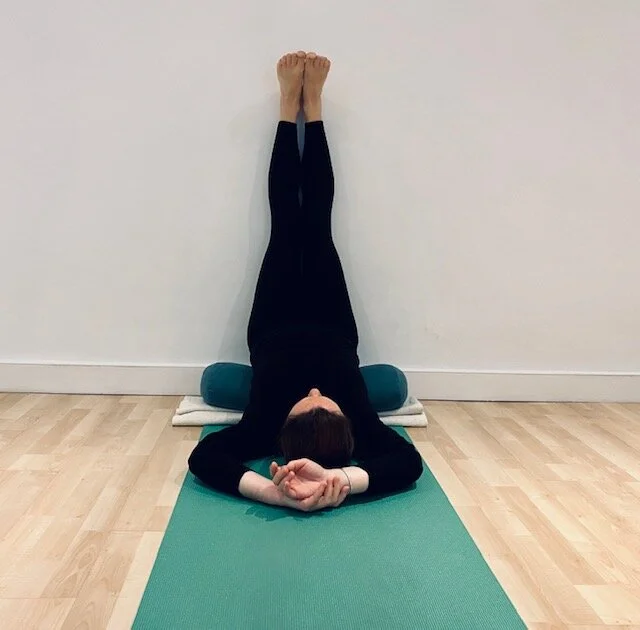
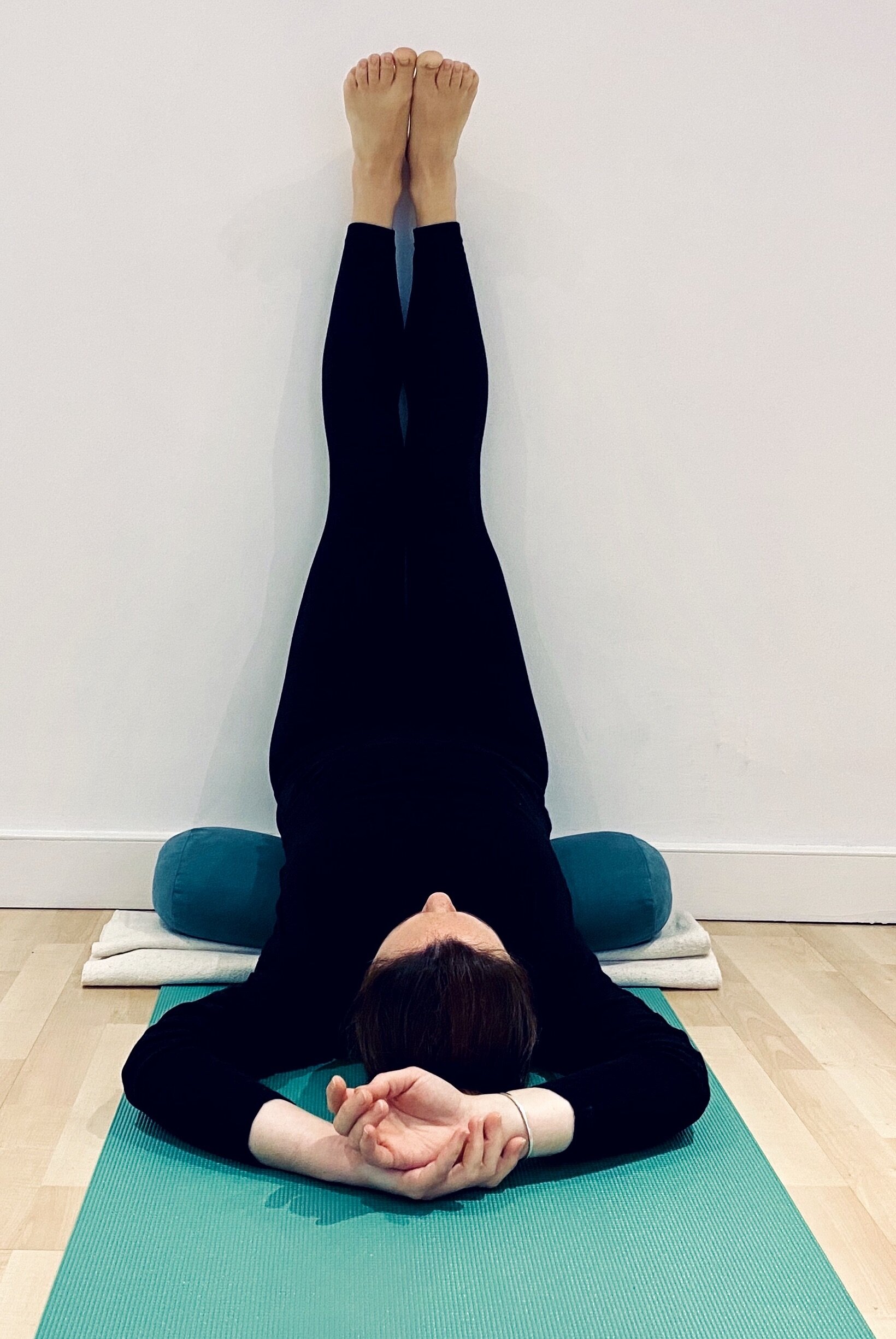
Restorative yoga is a slow, mindful yoga practice in which props are used to support the body so that it can become still and restful. This stillness slows the breath, soothes the nervous system and quietens the mind.
Why use Props?
The use of props allows us to hold poses for longer to promote a state of deep relaxation. Props encourage the passive release of muscular tension and opening of the body. Lying supine over a bolster, for example, broadens the chest and elongates abdomen, creating space and improving circulation to the respiratory system and internal organs. The spine is lengthened along the bolster to promote a healthy spinal column and a blanket may be used to support the head and neck, allowing for the smooth passage of the breath.

Restorative Yoga for Stress
The autonomic nervous system is one of the major neural pathways activated by stress. It is divided into two parts: sympathetic and parasympathetic. In stressful situations, the sympathetic nervous system triggers the so-called “fight or flight” response and the adrenal glands release the hormones cortisol and adrenalin, preparing the body for action. This response causes the heart to beat faster and blood pressure to rise. Breathing becomes more rapid and blood sugar is released to supply energy to the body.
If we lead stressful lives, the regular triggering of the stress response can lead to high blood pressure and an increased risk of heart attack or stroke. Stress also suppresses the effectiveness of the immune system and our ability to fight off antigens, inhibits digestive function and can lead to weight gain as the appetite rises to replenish the energy lost during the response.
Restorative yoga helps us to connect with the parasympathetic nervous system, which slows and halts the stress response. Instead of “fight or flight”, it calms us down and brings the body into “rest and digest” mode, in which it can heal and repair. When we practice restorative yoga, our breath becomes slow, smooth and even and the body rests. In this restful state, the digestive system can function more effectively and the body can recuperate. A regular restorative practice can teach us to transition more easily from “fight or flight” mode into a calm state.
…for Better Sleep
Because restorative yoga soothes and calms the body and helps us to connect with our breath, it can be very effective in encouraging a good night’s sleep. Practicing a few supported poses before bed and allowing the body to become completely relaxed, while maintaining slow, smooth breathing and focusing your mind on the breath if it is too active is an excellent way to prepare for bed, especially during times of stress.

…for Stiff Joints
Restorative yoga is slow, considered and kind to the body and is therefore highly beneficial for those who experience stiffness in the joints or other conditions such as hip, back or knee pain. Unlike in an active asana session, where we often exert ourselves physically in order to achieve certain postures, in a restorative session the body is gently encouraged to release into each pose, rather than to actively stretch.
Any tension or strain in the body is remedied by the use of props, which can be tailored to individual bodies and adjusted to support areas of tightness or stiffness that could inhibit a restful practice.
…for Mental Wellbeing
The competitive element of yoga practice which often creeps in during a yoga class (competition with others or oneself), is not present when practicing restorative yoga. We may be keen to decrease the number of props we use under our bodies in Supta Virasana, but once we are able to work peacefully in our own practice and to surrender the body to the support, we learn to shed this competitive element in ourselves.
If we are without pain and the body feels grounded, the mind is at ease. The physical indicators of pain, strain and tension are no longer being sent to the brain, so it doesn’t need to concern itself with solving a problem and the body can begin to heal.
Restorative yoga is sometimes described as the most advanced yoga practice. Although it is not advanced in a physical sense, it can be very difficult for us to still our minds and draw our attention inwards. When we are able to quieten the mind, which is something we learn to do in our restorative practice, we can give ourselves a mini-break from life and just be still.